
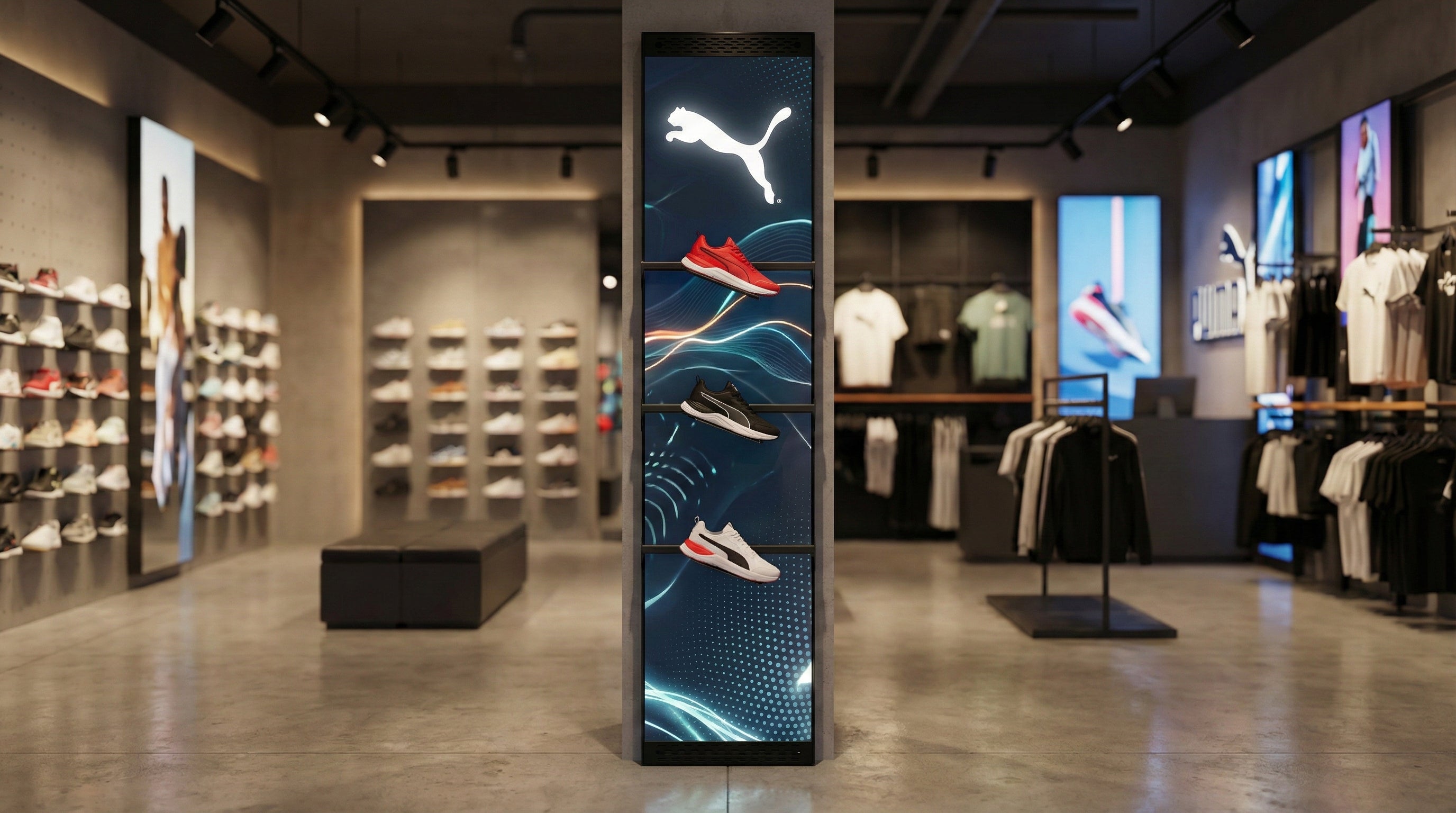
Walk down any major UK high street or through a premium shopping centre, and the trend is unmistakable: retail has gone digital. Global brands are investing vast sums of their marketing and shopfitting budgets into massive, full-height LED video walls to capture attention and drive footfall. These installations are visually stunning, yet they highlight a glaring disconnect in modern visual merchandising.
Despite the incredible investment in these digital canvases, nobody is putting the actual product in front of the video.
The Missing Link in Product LaunchesConsider the traditional product launch. A brand creates a high-impact, dynamic video campaign to highlight the engineering of a new trainer, the ingredients of a luxury fragrance, or the features of a high-tech consumer electronic device. They play this content on a towering LED wall, but the physical product itself is relegated to a separate floor standing fixture or an adjacent unlit shelf.
It begs the question: if you are launching a new product and have invested in a dynamic digital campaign to promote it, why would you not place the physical product directly in the forefront of that video?
Merging the Physical and the DigitalThis is the exact problem that first-of-its-kind digital merchandising solves. By utilising an advanced retail display system like Slotted UpBright®, retailers can place shelves and fixtures directly over the video wall.
Instead of treating the screen and the shelving as two separate entities, the centre section of the bay functions as a dynamic digital canvas, while the areas to the left and right remain beautifully illuminated. This allows brands to seamlessly blend physical products with digital storytelling. The customer can physically interact with the product while the promotional content wraps dynamically behind and around it, creating a truly immersive 'phygital' experience.
Unlocking Data-Driven Retail SpacesThe evolution of the digital display extends far beyond just visual impact; it is also about understanding the customer. When integrating screens into the retail infrastructure, brands have the opportunity to turn their merchandising bays into powerful analytical tools.
By incorporating discreet camera technology into the display, retailers can capture vital, anonymous data about how consumers interact with the space. This technology can track the demographics of the shopper—identifying age and sex—while measuring exactly how long they spend dwelling in zones within an 8-metre radius of the display.
Why Dwell Time and Demographics MatterIn the fast-paced retail sector, this data is gold. It allows brands and store managers to move away from guesswork and make data-driven improvements. If a high-energy video campaign is attracting a younger demographic but the dwell time is only five seconds, the brand instantly knows the physical product placement or the digital content needs optimising. Conversely, if a specific product placement over the video wall yields a three-minute dwell time, that successful formula can be rolled out across the entire estate.
The future of high street retail is not just about installing bigger screens. It is about creating smart, integrated systems where the physical product, the digital storytelling, and the customer data all work seamlessly together to drive sales.

